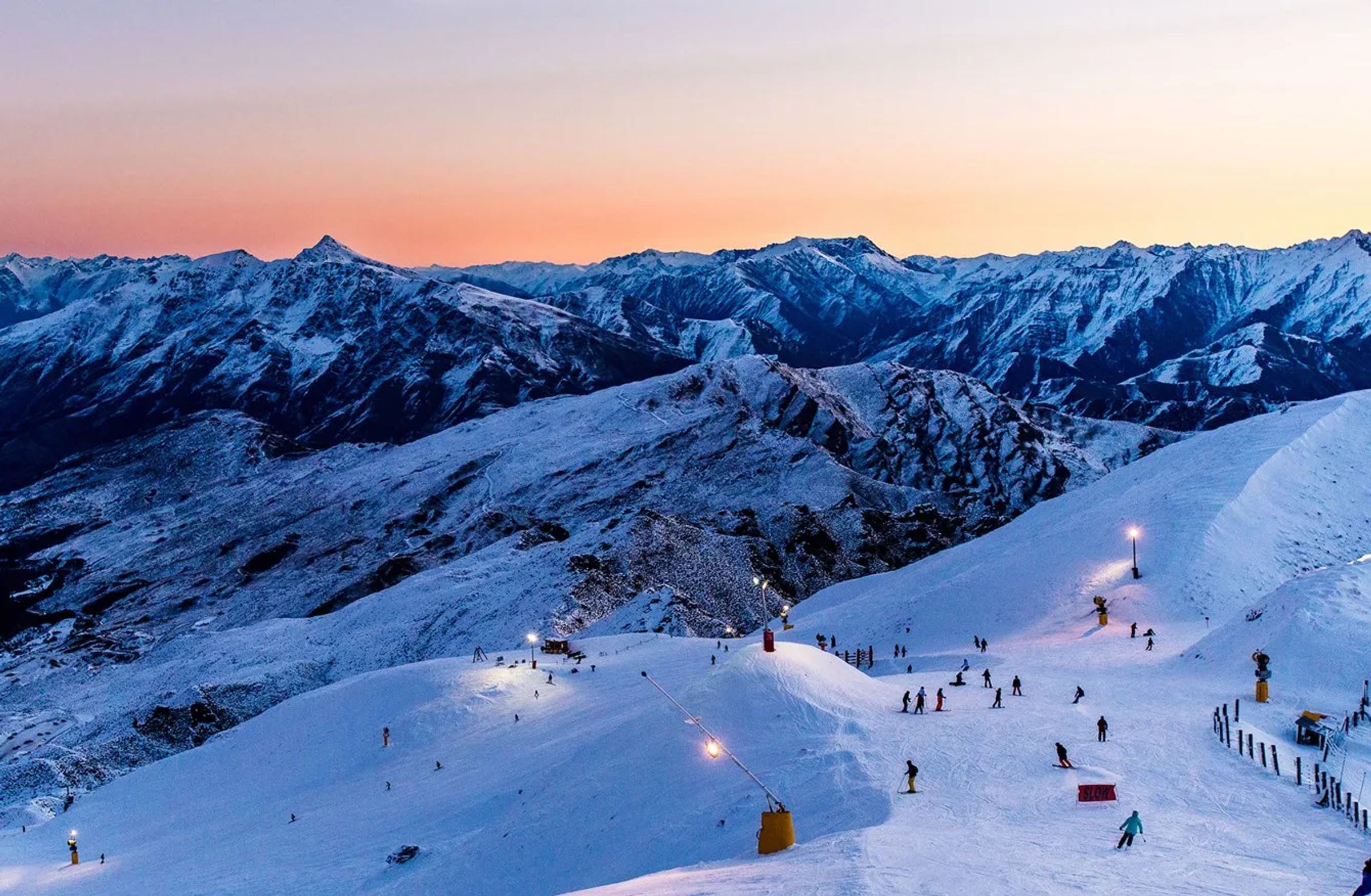
Coronet Peak
Ski 280 hectares just 20 minutes from Queenstown, with night skiing, First Tracks and NZ's largest snowmaking system.
Season 2026
Opens
13 June 2026
Closes
4 Oct 2026
Days open
113
Annual snow
2m
The Overview
Michael Fulton
Melbourne-based skier and snowboarder with 50+ resorts across 5 continents. Specialises in Australian resorts and international resort comparisons.
Coronet Peak is Queenstown's closest ski area and the oldest commercial ski field in New Zealand, first opening in 1947 with a single rope tow. The resort spans 280 hectares of skiable terrain on the southern flanks of the 1,649m peak, seven kilometres west of Arrowtown and just 20 minutes by sealed road from downtown Queenstown. The mountain rises from 1,187m to 1,649m with a 462m vertical drop across 32 runs — 14% beginner, 34% intermediate, 25% advanced and 27% expert.
The terrain is characterised by its rolling, undulating profile — often described as roller coaster skiing — with open faces, natural gullies and back bowls that reward confident skiers willing to explore beyond the groomed trails. Northern Hemisphere race teams regularly use Coronet Peak as a southern-season training base, and the mountain is the home field of local Queenstown skier Alice Robinson, a World Cup giant slalom winner.
Coronet Peak is the only resort in the Queenstown region to offer night skiing, with floodlit runs open from 4–9pm on Wednesdays and Fridays plus select Saturday nights from late June through early September. Combined with a First Tracks programme offering exclusive early access from 8–9am, the resort delivers the longest ski day in New Zealand — up to 13 hours of on-snow time.
The resort is operated by NZSki alongside The Remarkables and Mt Hutt, and all three mountains sit on a shared Superpass and 3 Peak Season Pass. Coronet Peak is also included on the Ikon Pass and Mountain Collective, making it accessible to international pass holders without a separate ticket purchase.
462m
Vertical
32
Runs
692 acres
Skiable
2m
Annual snow
Ikon / Mountain Collective
Pass
The Terrain
32 runs across 692 acres skiable
Coronet Peak spreads 32 runs across 692 acres skiable of terrain. It leans intermediate at 34%, with 4 beginner runs to find your feet and 17 advanced or expert runs when you want to push.
Terrain split
32
runs
32 runs across 4 grades
Beginner4 runs · 14%
Intermediate11 runs · 34%
Advanced8 runs · 25%
Expert9 runs · 27%
Time it right
When to visit Coronet Peak
Coronet Peak typically runs the longest season of any non-glacier resort in New Zealand, with the 2026 season operating from 13 June to 4 October. The new Snow Factory extends activity even earlier: from 30 May 2026, the learner slopes and a dedicated snow play zone will open for beginners, families and snow tubing, making Coronet Peak the first New Zealand resort to open for the 2026 season.
Average annual natural snowfall is approximately 2 metres, but the resort's comprehensive snowmaking system — capable of laying half a metre of cover across all main trails — means conditions are far less dependent on natural falls than at higher-altitude, non-snowmaking fields. The south-facing aspect helps preserve snow quality, and world-class grooming ensures piste conditions hold up even in variable weather.
The most reliable snow window runs from late July through August, when natural snowfall peaks and base depths are typically at their deepest. Spring skiing through September offers warmer days and fewer crowds, though the lower elevation means the season can tighten if conditions turn mild.
Night skiing runs from late June through early September on Wednesday and Friday evenings, with additional Saturday sessions during the July school holidays. The floodlit sessions draw a strong local crowd from Queenstown and are widely regarded as one of the region's signature winter experiences, with views across the illuminated slopes to the lights of Queenstown and Lake Wakatipu below.
Season 2026
13 June 2026
Opens
4 Oct 2026
Closes
113
Days open
2 m
Annual snow
Getting there
Getting to Coronet Peak, and where to stay
Coronet Peak sits just 18km from Queenstown on a fully sealed access road, making it the most accessible alpine ski area in the Southern Lakes region. The drive takes around 20 minutes from central Queenstown, with no chains required on the sealed road in normal conditions — a notable advantage over most other New Zealand ski fields, which typically involve gravel access roads.
Multiple shuttle bus services operate daily from Queenstown's Snow Centre, with hotel pick-ups available en route. The resort's proximity means it works well as a half-day activity, easily combined with Queenstown's other winter attractions. Arrowtown, the historic gold-mining village, lies just seven kilometres to the east.
Queenstown Airport is the nearest gateway, approximately 30 minutes from the resort, with domestic flights from Auckland, Wellington and Christchurch and direct international services from Sydney, Melbourne, Brisbane and the Gold Coast. The resort is also accessible from Invercargill (approximately two hours) and Dunedin (approximately three and a half hours).
The base area houses a large purpose-built lodge with restaurants, a bar, Cafe 1200, the iconic Heidi's Hut mid-mountain dining stop, and the Skiwiland childcare centre catering for children aged two to five. A retail shop, rental department and snowsports school round out the on-mountain facilities, and a new Heidi's Hot Tub provides a post-ski soak beside the hut.
Where to stay
Search all stays →Hotels and lodges near Coronet Peak, powered by Stay22.
Latest News
From the SnowStash desk
Saalbach Hinterglemm Resort Review: 270 km of Piste, 70 Lifts and a Three-Resort Pass
Four connected areas, 70 lifts and a World Championship course, yet Saalbach Hinterglemm still runs like a family holiday. Two days on snow and a Worlds Super-G later, here is who it suits, what the Ski ALPIN CARD covers and why Epic Pass holders should pay attention. Big on blues, light on steeps.
30 Sept 2026
Sölden Plans Four-Race World Cup Opener on the Rettenbach Glacier from 2027
Sölden's World Cup opener has been two giant slaloms on the Rettenbach glacier for as long as most fans can remember. From 2027/28 it could be four. Director Jack Falkner wants to add two Super-Gs, backed by a nod from Vincent Kriechmayr, and turn the opening into a full week where the ski world gathers in the Ötztal. FIS and the ÖSV are yet to sign off. This year, it's still just the two GS races on 24 and 25 October.
29 Sept 2026
Hokkaido Ski Resort Opening Dates 2026/27: Sapporo Kokusai Leads Off on 20 November
Hokkaido's lift season now has dates. Sapporo Kokusai opens first on 20 November, Niseko United, Kiroro, Rusutsu and Furano follow on 28 November, and Kamui closes the list on 12 December. Everything hinges on snow, and with a strong El Niño in play, the JMA gives Hokkaido's Japan Sea side a 40% chance of below-normal snowfall. Honshu's Japan Sea coast looks shakier.
28 Sept 2026
Swiss Ski Resorts Post Second-Highest Winter Revenue on Record Despite a Warm Season
Switzerland logged 25.7 million ski days last winter, only 2.3% off the record, in a season that ranked sixth-warmest since records began. Revenue hit CHF 895.8 million, second only to 2024/25. Zermatt led on visits and takings, foreign guests hit a ten-year high, and 12 resorts never opened at all. Snowmaking, late storms and high altitude carried the numbers. Anything sitting at 1,000-1,200 m had a far rougher time.
26 Sept 2026
Aspen Snowmass Marks 80th Anniversary With $3.75 Throwback Lift Tickets
Aspen Snowmass turns 80 this December, and it's marking the milestone with $3.75 lift tickets on the anniversary itself - the original 1946 price. A discounted long weekend, $19.46 dining specials, lodging deals up to 46 percent off, and a season of anniversary programming round out the celebration across all four mountains.
17 Sept 2026
Doppelmayr Group Posts 9.1% Revenue Growth in 2025/26, Passing 1.3 Billion Euros
Doppelmayr closed its 2025/26 business year with revenue up 9.1 percent to 1.3 billion euros, driven by projects including the Big Sky Explorer Gondola, Deer Valley's Mayflower East Village Gondola, and the first TRI-Line installation at Hoch-Ybrig. Headcount grew too, with the ropeway manufacturer now employing almost 4,000 people worldwide.
16 Sept 2026
Hintertux Glacier Replaces 40-Year-Old Gondola to Tuxer Fernerhaus
Hintertux Glacier is retiring its 40-year-old gondola to the Tuxer Fernerhaus. The replacement carries 10 people per cabin instead of four, with seat heating and nearly 40 percent more hourly capacity. Doppelmayr's new line opens at the end of October 2026, right as the glacier's high-altitude terrain becomes accessible again for the new season.
16 Sept 2026
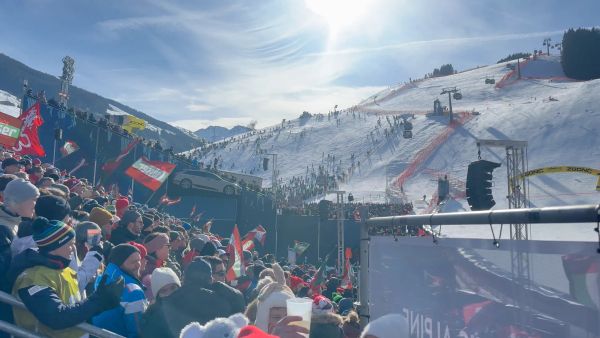
FIS Weighs Holding World Championships in Almost Every Winter, Starting 2032
The International Ski and Snowboard Federation is looking at a major shake-up to its title events calendar. From 2032, World Championships could run not just in odd-numbered years but in every non-Olympic winter too, effectively putting a global title event on the calendar almost every season. The FIS Council has approved the concept following a feasibility study, though an accelerated rollout as early as 2028 is also under consideration.
4 Sept 2026
Coronet Peak Webcams
3 live angles across the mountain. Tap any camera to go full-screen.
About Coronet Peak's live webcams
Check live conditions across Coronet Peak with 3 real-time webcams showing snow, weather, and lift operations, updated every 10 minutes. Check high-elevation cams for powder visibility and base-area cams for crowd levels before you head up.
Camera guide
- Coronet Peak Base1187m
- Located at the base station of the main lifts this webcam looks out to the main runs as they connect in the village.
- Meadows Base1187m
- The Coronet Peak webcam positioned at the base building offers a clear view of the Meadows Express Chairlift, perfect for checking lift queues before heading to the slopes.
- Coronet Express1187m
- Watch the action unfold at the main lift with this Coronet Peak web cam showing real-time conditions at the popular Coronet Express departure point.
Coronet Peak snow cams FAQ
How often do Coronet Peak snow cams update?
All Coronet Peak snow cams and webcams update every 10 minutes with fresh images showing current mountain conditions. This frequent update schedule ensures you have access to near real-time conditions for planning your ski day at Coronet Peak.
Which Coronet Peak webcam shows the best powder conditions?
The high-elevation Coronet Peak Base webcam at 1,187m provides the clearest view of powder conditions and snowfall. These Coronet Peak webcams capture fresh snow accumulation and visibility better than base area cameras.
Can I see Coronet Peak lift queues on the webcams?
Yes. Multiple Coronet Peak snow cams specifically show lift queue areas and chairlift operations, helping you time your arrival and avoid peak queue periods.
When is the best time to check Coronet Peak snow cams?
Check Coronet Peak webcams early morning (7-8am) for overnight snowfall assessment, and mid-afternoon for current crowd levels and weather. The live cams are most useful after storm events to assess fresh powder.
How can I check current conditions before buying Coronet Peak lift tickets?
Use our Coronet Peak webcams alongside the live snow report to assess conditions before purchasing lift tickets. The webcams show real-time visibility, snow quality, and operational status.
Do Coronet Peak webcams work on mobile devices?
Yes. All Coronet Peak snow cams and webcams are optimized for mobile viewing, so you can check live conditions from anywhere using your phone or tablet.
More Coronet Peak intelligence: snow report, lift tickets, trail map, resort overview.